
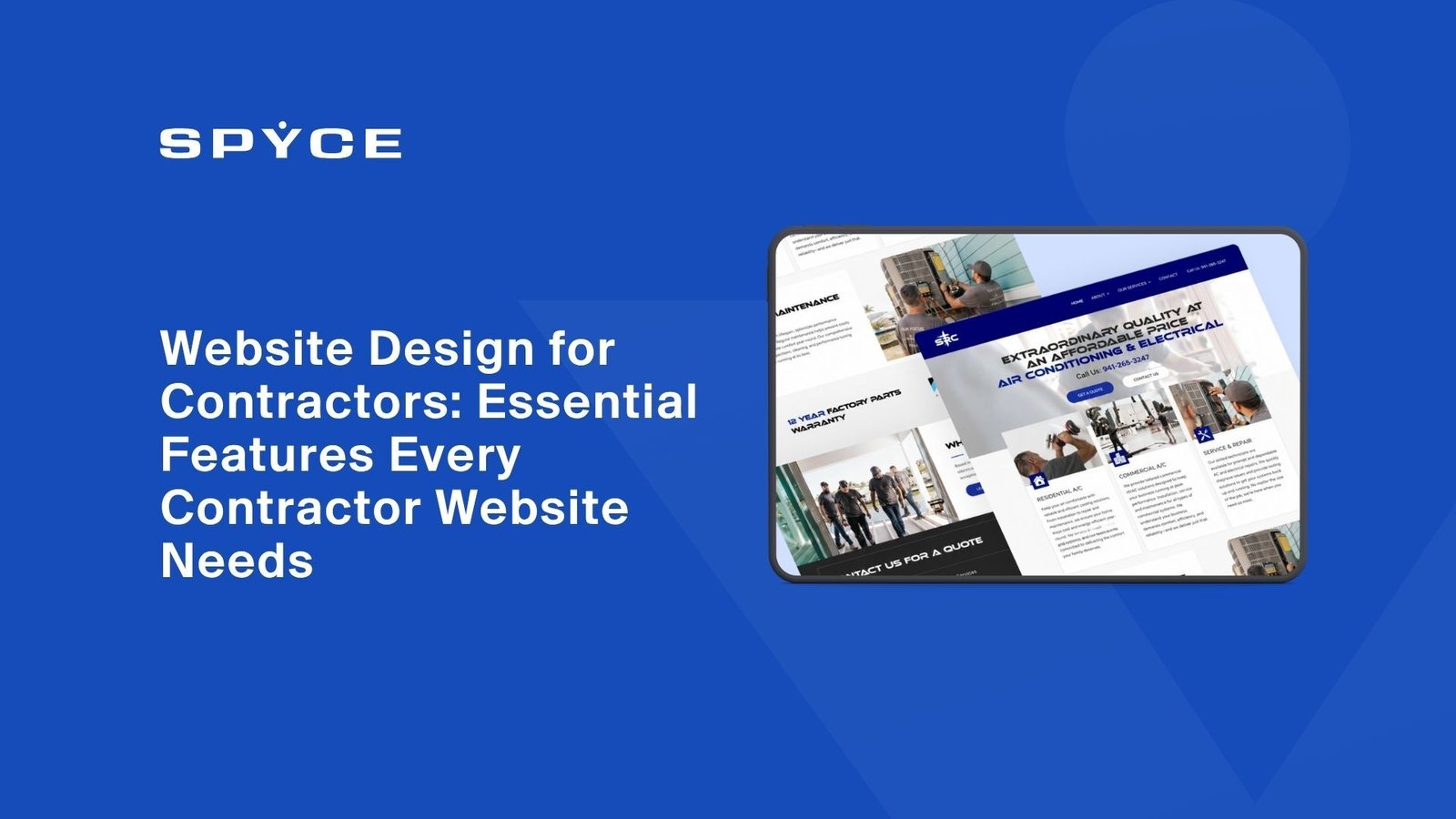
Your Website Is Often Your First Job Interview
97% of consumers research a business online before making contact. For contractors, that number carries more weight than most industries because homeowners aren't making a low-stakes purchase. They're inviting someone into their home, spending thousands of dollars, and trusting that the work will hold up for years.
That research happens on your website. Before they call. Before they ask a neighbor for a referral. Before they've spoken to anyone at your company.
Here's the reality most contractors don't think about:
Many of them built their website years ago and haven't touched it since. The photos are outdated, the messaging is generic, the mobile experience is broken, and there's no clear way for a visitor to request a quote without hunting for it.
Meanwhile, a homeowner comparing three contractors is making a judgment call based entirely on what they see online. The contractor with the clearest, most trustworthy website wins that call more often than not.
The best contractor websites function like a top-performing salesperson.
- They build trust before the first conversation, answer questions before they're asked, and guide prospects toward taking action.
The difference between a website that generates consistent quote requests and one that doesn't usually comes down to a handful of key features.
What Makes a Great Contractor Website?
A strong website design for contractors isn't about having the most impressive design or the most features. It's about combining the right elements in the right way to move a visitor from "I found this company" to "I want to reach out."
The core components that make contractor websites generate leads:
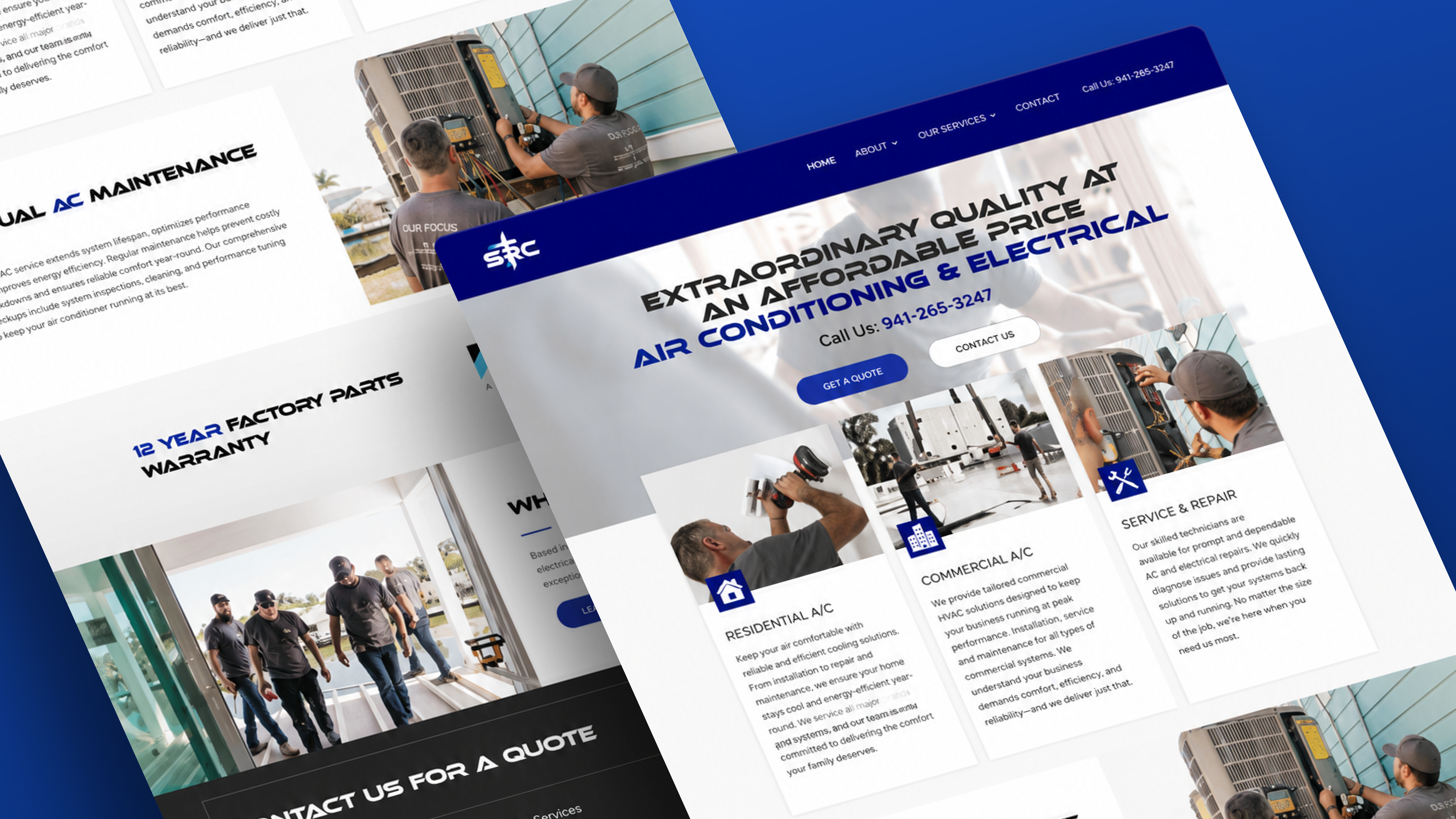
- Clear messaging that immediately tells visitors what you do, where you work, and why you're worth hiring
- Simple navigation that makes finding information effortless
- Mobile usability that works perfectly on the device most visitors use
- Fast load times that don't lose visitors before the page even finishes loading
- Strategic calls-to-action that make requesting a quote the obvious next step
- Trust-building content that reduces hesitation before the first phone call
A contractor website shouldn't just showcase projects. It should generate leads. Every feature decision should serve that goal.
Homepage Structure That Turns Visitors Into Leads
Your homepage is where first impressions form. Visitors decide whether to stay or leave within 10-20 seconds of arriving. The structure of that page determines whether they stay long enough to become a lead.
Clear Value Proposition
The first thing visitors see should answer three questions immediately:
- What services do you provide?
- Where do you work?
- Why should a homeowner choose you over the other contractors they're comparing?
Generic headlines like "Quality Work You Can Trust" answer none of those questions. A headline like "Custom Roofing and Exterior Renovation for Boston-Area Homeowners" answers all three in one line.
Specificity is what separates contractors who win inquiries from their websites from those who don't. Vague messaging creates doubt. Specific messaging creates confidence.
Prominent Contact Information
Your phone number should be visible without scrolling and clickable on mobile. Your quote request button should be impossible to miss. Your service area should be clear so visitors immediately know whether you work in their location.
Visitors who arrive ready to reach out shouldn't have to work to find a way to contact you. Every second spent searching for contact information is a moment where they might click back to Google and call your competitor instead.
Above-the-Fold CTA
Above the fold means everything visible before a visitor scrolls. This is your highest-value real estate and the most wasted space on most contractor websites.
Your primary CTA should live here. "Request a Free Estimate," "Schedule a Consultation," or "Get a Quote" all work because they're specific about what happens next. Make it a button, make it visible, and make it impossible to overlook.
Quick Trust Indicators
Before visitors read your service descriptions, they're asking whether they can trust your company. Quick trust indicators answer that question without requiring effort.
Years in business, certifications, license numbers, and customer review ratings placed near the top of your homepage signal credibility in seconds. A line like "Licensed and Insured Serving [Location] Since 2009" communicates more trust than three paragraphs of company history.
Visitors should understand your business, your credibility, and how to contact you within seconds of arriving. Anything that delays or confuses that understanding costs you leads.
Service Pages That Answer Questions Before Customers Ask
A single "Services" page listing everything you do in bullet points is one of the most common and costly mistakes on contractor websites.
Dedicated service pages, one page per service type, do two things at once. They improve your visibility in search results for specific queries like "HVAC installation [city]" or "deck builder near me." And they give serious prospects the detailed information they need to feel confident reaching out.
Each service page should include:
- Detailed service descriptions covering what the work involves, what the process looks like, and what the finished result delivers
- Photos of completed work specific to that service, not a general gallery mixing unrelated projects
- FAQs that address the questions homeowners ask most often: How long does it take? What does it typically cost? Do you handle permits?
- Service areas so visitors immediately know if you work in their location
- Customer testimonials specific to that service
- Clear next steps at the bottom of the page telling visitors exactly what to do after reading
The more specific your service pages, the more likely you are to attract qualified leads. A homeowner researching kitchen remodeling wants to read about kitchen remodeling, see kitchen remodeling photos, and find answers to kitchen remodeling questions. A page that delivers all of that converts significantly better than a generic services overview.
Why Mobile Design Matters for Contractors
Contractor websites get viewed in specific contexts that make mobile performance especially critical. Homeowners search while on job sites watching other work get done. They research during commutes after noticing something wrong with their roof or HVAC. They pull up their phone during emergencies when they need help fast.
Over 70% of web traffic comes from mobile devices. For local contractor searches, that number is likely higher because of exactly these contexts.
A mobile-friendly contractor website includes:
- Fast loading speeds under 2 seconds, because 53% of mobile visitors abandon pages that take longer than 3 seconds to load
- Large tap targets with buttons and links sized for thumbs, not mouse cursors
- Click-to-call buttons that turn your phone number into a one-tap action
- Easy-to-complete forms with large input fields and minimal required information
- Readable text that doesn't require zooming or horizontal scrolling
A poor mobile experience costs you leads before visitors ever learn what your company does. They don't stick around to zoom in and read your service descriptions. They go back to search results and find a contractor whose website works on their phone.
The Trust Signals Every Contractor Website Needs
Homeowners hiring contractors face real risk. They're spending significant money, inviting strangers into their homes, and trusting that the work will be done correctly and honestly. Trust signals are the elements that reduce that perceived risk and move hesitant visitors toward reaching out.
Reviews and Testimonials
Google reviews are the most powerful trust signal for local contractors because they're verified and come from real customers.
Display your review rating and count prominently. Include specific testimonials that describe the project, the experience, and the outcome. "They replaced our roof in two days, cleaned up completely, and the final cost matched the estimate exactly" is far more convincing than "Great company, highly recommend."
Video testimonials are even more effective because they're harder to fake and create genuine human connection.
Project Galleries
Your gallery should show more than finished results. Before-and-after photos demonstrate the transformation. In-progress photos signal professionalism and attention to detail. Project descriptions that include scope, timeline, and outcome give prospects realistic expectations.
Organize your gallery by project type so visitors can quickly find examples relevant to the work they're considering.
Certifications and Licenses
Display licensing and insurance information specifically, not vaguely. "Licensed and Insured" as a general claim is less convincing than your actual license number and a statement of your liability coverage.
Industry certifications from manufacturers, trade associations, and local business groups add credibility that competitors without them can't easily match.
Service Area Information
List the specific cities, towns, and neighborhoods you serve. Visitors trying to determine if you work in their area shouldn't have to call to find out. Unclear service areas create uncertainty that sends prospects to contractors with clearer information.
Homeowners hire contractors they trust, not necessarily the cheapest option. Every trust signal on your website reduces the hesitation preventing visitors from reaching out.
CTA Placement: Making It Easy to Request a Quote
A homeowner can spend ten minutes on your website reading service pages, reviewing your gallery, and checking your reviews, then leave without contacting you because the next step wasn't obvious or easy enough to find.
Effective CTAs need to appear at the right moments throughout your website:
- Above the fold on your homepage for visitors who arrive ready to act
- At the end of every service page to capture visitors at peak interest after reading detailed information
- Throughout long-form content so visitors don't have to scroll back up after finishing a section
- In your website header so a conversion opportunity is visible on every page
- On mobile screens with a sticky click-to-call button that stays accessible as visitors scroll
CTA language should be specific: "Request a Free Estimate," "Schedule a Consultation," "Start Your Project." Vague prompts like "Contact Us" or "Learn More" convert at lower rates because they don't tell visitors what they'll get.
Even interested visitors may leave if the next step isn't clear. The goal is to make requesting a quote feel like the natural, obvious, effortless thing to do at every stage of their visit.
Common Contractor Website Mistakes
Most underperforming contractor websites don't need flashy features or expensive redesigns. They need stronger fundamentals. These are the problems showing up most often:
Generic messaging that could belong to any contractor in any market. If your homepage copy could work for a competitor without changing a word, it's not doing its job.
Outdated design and photos that signal your business hasn't evolved. Homeowners notice when project photos look years old or when a website feels like it was built in 2014.
Missing service pages that force visitors to dig for specific information or leave without finding it. One generic services page isn't enough.
Slow load times that lose visitors before they see your content and hurt your rankings in Google search results at the same time.
Weak CTAs buried at the bottom of pages in small text that doesn't stand out. If visitors have to hunt for a way to request a quote, you're losing leads you already earned.
Poor mobile performance that frustrates the majority of visitors before they read a single word of your content.
No reviews or project photos leaving visitors with no evidence to evaluate whether you're trustworthy.
Fix these fundamentals before pursuing anything more sophisticated. They're the reason most contractor websites underperform, and addressing them consistently produces measurable improvement in leads.
Your Website Should Work as Hard as You Do
Great contractor websites build trust quickly, answer questions proactively, and make taking action easy. Homepage structure and service pages directly influence how many visitors become leads. Mobile usability determines whether the majority of your traffic can even use your website effectively. Trust signals reduce the hesitation that stops interested prospects from reaching out. And clear, well-placed CTAs make the next step obvious at every point in the visit.
Small improvements to these fundamentals can create significant business growth because they multiply the value of every visitor your website already receives.
Your website shouldn't just showcase your work. It should consistently help you win more of it.
Ready to build a contractor website that generates consistent quote requests? Schedule a free strategy call and we'll show you exactly what's holding your current website back and which improvements will have the biggest impact on your lead volume.