



Your Website Looks Fine. So Why Isn't It Converting?
Your website gets traffic. Google Analytics confirms it. But leads? Sales? Those numbers tell a different story.
Here's what's frustrating: Your website doesn't look broken. The design is clean. Navigation works. Content exists. Yet somehow, visitors arrive and leave without contacting you, requesting quotes, or making purchases.
Most businesses assume they have a traffic problem and pour money into ads. But what if the real issue is conversion leakage? What if you're already attracting the right people, but subtle friction is quietly pushing them away?
Research shows a 1-second delay in page load reduces conversions by 7%. Unclear messaging can drop conversion rates by over 80%. A confusing form can cut submissions in half.
Small issues compound. Subtle friction adds up. And most businesses never realize how much revenue quietly leaks through the cracks.
These aren't dramatic failures. They're invisible problems hiding in plain sight: unclear messaging, slow load times, weak calls-to-action, frustrating forms, poor mobile experiences, missing trust signals, and design that prioritizes looks over user flow.
Each one alone might seem minor. Together, they're costing you customers daily.
Hidden Issue #1: Unclear Messaging Above the Fold
-1.png?width=1920&height=1080&name=New%20Spyce%20Blog%20Banners%20(5)-1.png)
Visitors spend 50 milliseconds forming first impressions. In that moment, they're asking: "What is this? Is this for me? What do I do next?"
If your homepage says "Welcome to ABC Company" or "Innovative solutions for modern businesses," you've told them nothing useful. They're already hitting the back button.
Think about the last time you landed on a website and couldn't immediately tell what the business did. Frustrating, right? You probably left. Your visitors are doing the same thing right now.
"We're passionate about helping our clients succeed" sounds nice but means nothing. Passionate about what? Helping who? It's corporate speak that could apply to literally any business.
How to Fix This
Your headline should be so clear your visitors understand it instantly. "Get Your Roof Repaired in 48 Hours" beats "Welcome to Smith Roofing" every time.
Right below that, add a subheadline addressing who you serve and why they should care: "Licensed contractors serving Tampa Bay homeowners since 2010. Free estimates, no hidden fees."
Then one clear button. Not five competing options. One: "Get Free Estimate" or "Schedule Consultation."
Try this today: Show your homepage to someone unfamiliar with your business for 5 seconds. Then ask them what you do. If they can't explain it clearly, your messaging needs work.
Hidden Issue #2: Slow Page Speed (Even If It Doesn’t Feel Slow to You)
Here's the thing about website speed: It never feels slow on your office computer with fast WiFi. But your customers are browsing on phones with spotty cellular connections.
A 3-second load time gives you a 53% bounce rate. More than half your visitors leave before seeing anything because they won't wait.
Every additional second costs conversions. A 1-second delay reduces conversions by 7%. And Google actively penalizes slow websites in search rankings.
What's making your website slow? You're uploading photos straight from your camera without compressing them. You've installed 30+ WordPress plugins over the years. Your hosting is cheap shared hosting that can't handle normal traffic. Your mobile performance is terrible.
How to Fix This
Go to Google PageSpeed Insights right now and test your website. Scoring below 50? You're losing customers daily.
Compress every image before uploading. Tools like TinyPNG make this easy. Audit your plugins ruthlessly. Do you really need that social sharing plugin with 2 clicks per month?
If your website goes down or slows during normal traffic, upgrade your hosting. The $10/month you're saving isn't worth the customers you're losing.
Test on actual mobile devices with cellular connection. If you're frustrated, your customers definitely are.
This is why it's important to focus on speed, not just the design. A beautiful website that loads slowly converts worse than a simple website that's fast. We optimize for speed from day one because we've seen the data: every millisecond matters. Performance isn't something we add at the end. It's built into every decision we make, from how we write code to how we structure content to which hosting solutions we recommend.
Pretty designs are easy. Fast, functional designs that actually convert? That requires a performance-first mindset most agencies skip entirely.
Hidden Issue #3: Weak or Misplaced Calls-to-Action
You've probably visited websites where you genuinely wanted to buy something but couldn't figure out how. The contact button was buried. Multiple competing options confused you. Or buttons just said vague things like "Learn More.
I see this constantly: homepages with "Call Now" and "Get Quote" and "Schedule Consultation" and "Download Guide" and "Chat With Us" all fighting for attention. When everything is a priority, nothing is. Visitors don't choose between five options. They choose none and leave.
And then there's passive language. "Submit" doesn't tell me what happens when I click. "Learn More" could mean anything.
How to Fix This
Every page needs one primary goal. What's the single most important action for this page? Make that call-to-action prominent.
Your CTA should be strategically placed. Above the fold, after key sections, and at the end. That's not pushy. That's giving people natural opportunities to say yes.
Use benefit-oriented language. "Get Your Free Estimate" tells me exactly what I'm getting. "Schedule Your Consultation" is clear and specific.
Hidden Issue #4: Friction in Forms and Contact Processes
Forms are where interested visitors become leads. Or where they give up and leave.
Forms asking too many questions. Confusing layouts. No confirmation after submission. Days-long response times. Each creates hesitation, and hesitation kills conversions.
The more effort something requires, the fewer people complete it. Research shows that each additional form field drops completion rates. By the eighth field, most visitors have already abandoned. You're making potential customers work too hard just to ask a question.
How to Fix This
Ask only for essentials: name, contact method (phone or email), brief message. That's it. If you need more detail, break longer forms into 2-3 simple steps instead of one intimidating page.
Set immediate expectations: "We respond within 24 hours" right on the form.
Send automatic confirmation emails the moment someone submits, reassuring them you received it and when they'll hear back.
Hidden Issue #5: Poor Mobile Experience
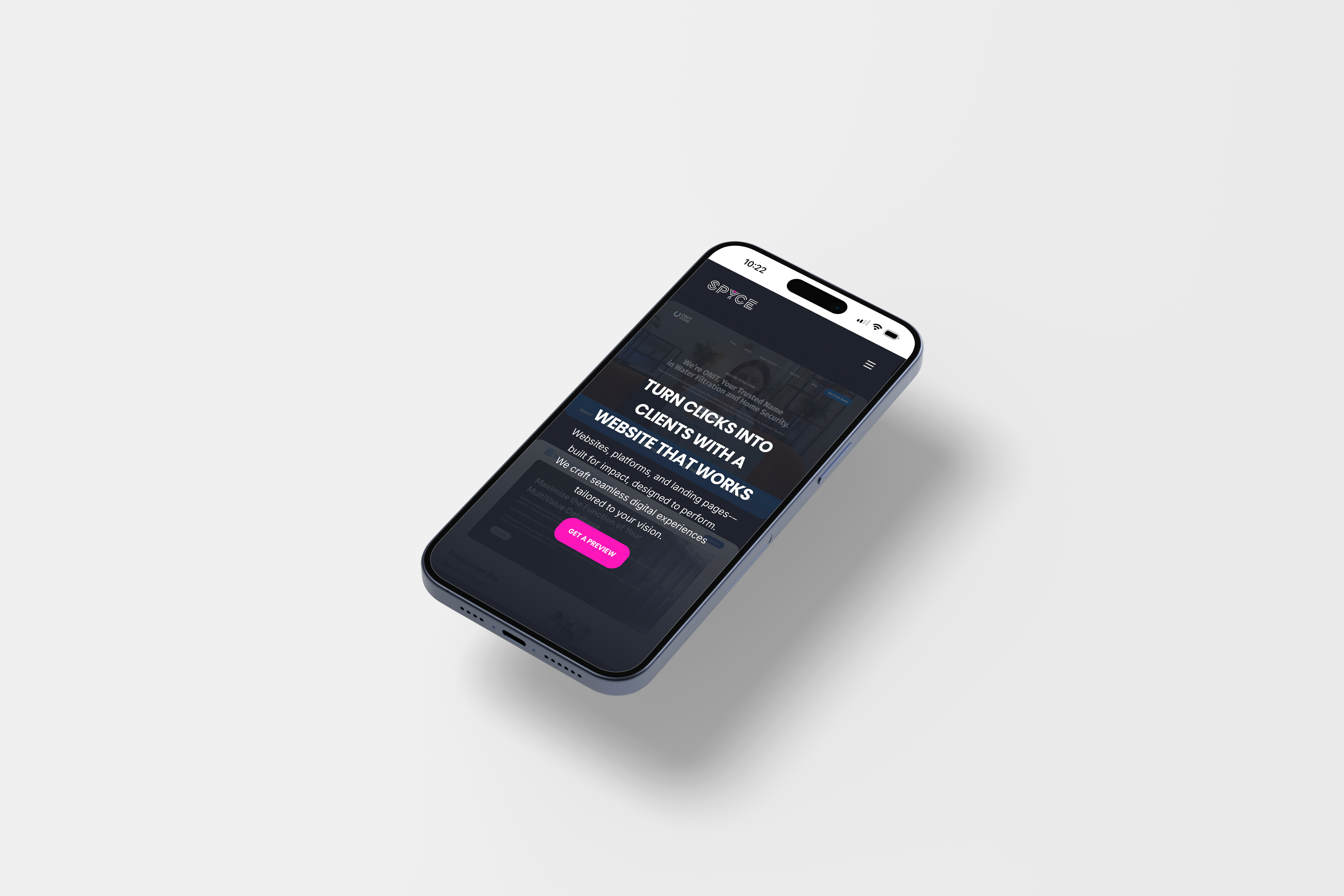
Over 60% of web traffic comes from mobile devices. Even for B2B. Even for expensive purchases. People research everything on phones now.
You know that feeling when you're trying to tap a button on your phone and you keep hitting the wrong thing? Or when you have to pinch and zoom just to read text? That's what poor mobile experiences feel like. And mobile users don't power through frustration. They leave immediately.
Your navigation might work great on desktop. On mobile, it becomes a nightmare. Hamburger menus that don't open. Links so close together you can't tap the right one. Forms designed for desktop keyboards that don't work on mobile.
How to Fix This
Stop designing for desktop first. Start with mobile. If it works beautifully on a phone, scaling up to desktop is easy.
Make buttons and links big enough to tap comfortably. Apple recommends 44x44 pixels minimum. When in doubt, go bigger.
Simplify everything for mobile. What works on desktop might need complete reorganization for mobile screens.
Test on actual devices. Don't just resize your browser. Grab an iPhone and Android phone. Navigate your website. Try to fill out your contact form. Any friction? Fix it.
Hidden Issue #6: Lack of Trust Signals
Nobody wants to be the first customer. We all want proof that other people had good experiences before we commit.
When visitors can't find evidence you're legitimate and trustworthy, they hesitate. And hesitation kills conversions.
Your website might have no testimonials. No reviews. No case studies. Just your own claims about how great you are. Why should anyone believe you?
Or your content is clearly outdated. Blog posts from 2019. Copyright footer showing 2021. This screams "inactive business."
Generic stock photos hurt too. Obviously fake photos of diverse people in business casual smiling at cameras. Everyone knows they're fake.
How to Fix This
Get specific testimonials from real clients. Not "Great service!" but "Smith Roofing completed our kitchen remodel in 6 weeks and stayed within our $45K budget even when they discovered unexpected plumbing issues."
Use real photography. Take photos of your actual team, your actual work. Authenticity builds trust way faster than stock photography.
Create case studies showing before and after. What was the problem? What did you do? What were the specific results?
Display your contact information everywhere. Physical address, phone number, business hours. Real businesses have real locations.
Update your content regularly. Fresh blog posts, current copyright dates, recent project photos signal an active business.
Hidden Issue #7: Designing for Looks Instead of User Flow
Beautiful websites that don't convert are expensive art projects, not business assets.
I see this all the time. Gorgeous design, creative layouts, impressive visual effects. But visitors can't figure out where to go or what to do. Important information is buried. The path to conversion is unclear.
Pages exist without clear purpose. Navigation changes between pages. Buttons that look clickable don't do anything. Key information is hidden. Pricing requires hunting through multiple pages. The contact form is three clicks deep.
How to Fix This
Clear user journey mapping: Understand how different visitors navigate your website, where they enter, what they need, and where they should go next. Map these paths intentionally instead of hoping visitors figure it out themselves.
Intentional page structure: Every page should have a clear purpose that guides visitors toward a specific action. Your homepage converts cold traffic, service pages provide details and prompt contact, and about pages build trust.
Heatmap and behavior analysis: Use tools like Hotjar or Microsoft Clarity to watch session recordings showing where real users click, scroll, and get stuck. Fix the confusing parts based on actual behavior, not assumptions.
Strategy-first wireframing: Define your conversion goals before designing anything, what action should this page drive? Then design the layout to support that goal instead of forcing goals into pretty designs.
The Real Cost of "Almost Working"
Let's do some math.
Your website gets 1,000 visitors monthly. With a 2% conversion rate, that's 20 leads.
Fix these issues and increase conversion to 4%. Same traffic, but now you're getting 40 leads monthly. You just doubled leads without spending a dollar on ads.
Over a year, that's 240 additional opportunities. If your average customer value is $5,000, you just added $1.2 million in potential revenue by fixing friction instead of buying more traffic.
Most businesses obsess over getting more visitors when conversion is the actual problem. They spend thousands on ads driving people to broken experiences, then wonder why ROI is terrible.
Minor improvements compound dramatically. Each fix alone seems small. Together, they transform performance.
Stop Losing Revenue to Invisible Problems
Your website doesn't need to look broken to be broken.
These seven issues hide in plain sight, quietly costing you leads and sales while you focus on getting more traffic. But traffic isn't your problem. Conversion is.
The businesses winning online aren't getting the most visitors. They're converting the highest percentage of visitors they already have.
Ready to find out what's costing you conversions?
Schedule a call to discover which issues are costing you leads and the specific fixes that'll increase conversions. Because every visitor who leaves without converting is revenue going to a competitor who fixed these issues first.